
 STRATEGIC DECISION
 IN-HOUSE ENGINEERING VS. OFFSHORE OUTSOURCING.
Low offshore hourly rates seem attractive on day one until communication breakdowns, delayed launches, and security risks surface. Discover why scaling businesses choose 100% in-house software engineering.
WHY IN-HOUSE ENGINEERING WINS
Key trade-offs between local engineering and offshore software outsourcing.

DIRECT COMMUNICATION
Communicate directly with the senior engineers writing your code. Zero timezone friction or middleman miscommunication.
- Direct contact in Dutch & English
- Fast response within 24 hours
- Zero wasted hours due to misinterpretation

CLEAN ARCHITECTURE
Clean, maintainable software built on our proprietary CORE framework. Zero quick-fix hacks or messy spaghetti code.
- 100% full source code ownership
- High performance with minimal latency
- Easily scalable for future roadmaps

SECURITY & PRIVACY
Your data and code reside on dedicated physical server cores in secure datacenters, fully managed in-house and in the region you choose.
- Hosted on dedicated physical cores, managed in-house
- Proactive firewall & anti-scraping defense
- Full control over where your data runs

PREDICTABLE TIMELINE & PRICING
Offshore quotes often grow once the project starts. We agree on a fixed scope and price upfront, so the number you see at the start is the number you pay at delivery.
- Fixed-scope quote agreed before work starts
- No hidden hourly overruns
- One team accountable from start to finish
COST OF OWNERSHIP OVER THREE YEARS
The hourly rate is the easy comparison. The total cost is the honest one. This is an illustrative picture, not a quote.
| Cost area | Typical offshore route | LUX-LEET |
|---|---|---|
| Hourly rate | Low on paper: often €20 - €45 per hour | Higher: €90 - €120 per hour, fixed scope |
| Effective hours | Inflated by rework, spec clarification, and repeated QA rounds | Fewer hours - clear specs up front, little rework |
| Management overhead | You supply a PM or tech lead to bridge timezone and spec gaps | A direct line to the engineers - no bridge layer |
| Rework and stabilisation | Common - sometimes a second vendor to get the code working | Tested and audited before handover |
| 3-year total | The low rate rarely survives contact with rework and management | Higher rate, predictable end figure |
The rule of thumb we see in practice: budget two to three times the quoted figure once you count management, rework, and delay. On a tightly scoped brief that gap is small; on anything that needs judgement, it rarely is.
WHEN OFFSHORE IS THE RIGHT CALL
Offshore isn't the wrong call by default. It works well when your situation looks like this:
- A well-scoped, commodity build with a complete, stable brief.
- You have a strong in-house tech lead with capacity to manage a remote team daily.
- Budget for a real management and QA layer on top of the development cost.
- Non-critical internal tooling where a slower feedback loop is acceptable.
If two or more of those don't sound like you, building in-house is usually finished sooner and cheaper end to end.
TAKING OVER A STALLED PROJECT
Already started with a remote team? This is how we take it over without starting from zero.
CODEBASE AUDIT
We read through the whole codebase: what works, what's fragile, and where the security and data problems are.
STABILISE
We fix the blockers and the most dangerous bugs first, so the project is back on solid ground.
DOCUMENT & RE-ARCHITECT
We write down how the system fits together and rebuild the weak parts as clean, maintainable code.
CONTINUE IN-HOUSE
One team picks up the roadmap in clear sprints, with direct communication and a fixed scope per step.
PROJECTS WE ENJOYED BUILDING


CLEAR ANSWERS
Why is in-house engineering in the Netherlands more reliable than offshore outsourcing?
Offshore developers operate in different time zones with potential language barriers and high staff turnover. LUX-LEET builds 100% in-house in the Netherlands with direct access to your senior engineering team.
Isn't offshore software development much cheaper long-term?
A low initial hourly rate is tempting, but miscommunication, code rewrites, missed launch dates, and security flaws often multiply your Total Cost of Ownership (TCO) by 2x to 3x.
How does LUX-LEET handle security and data governance?
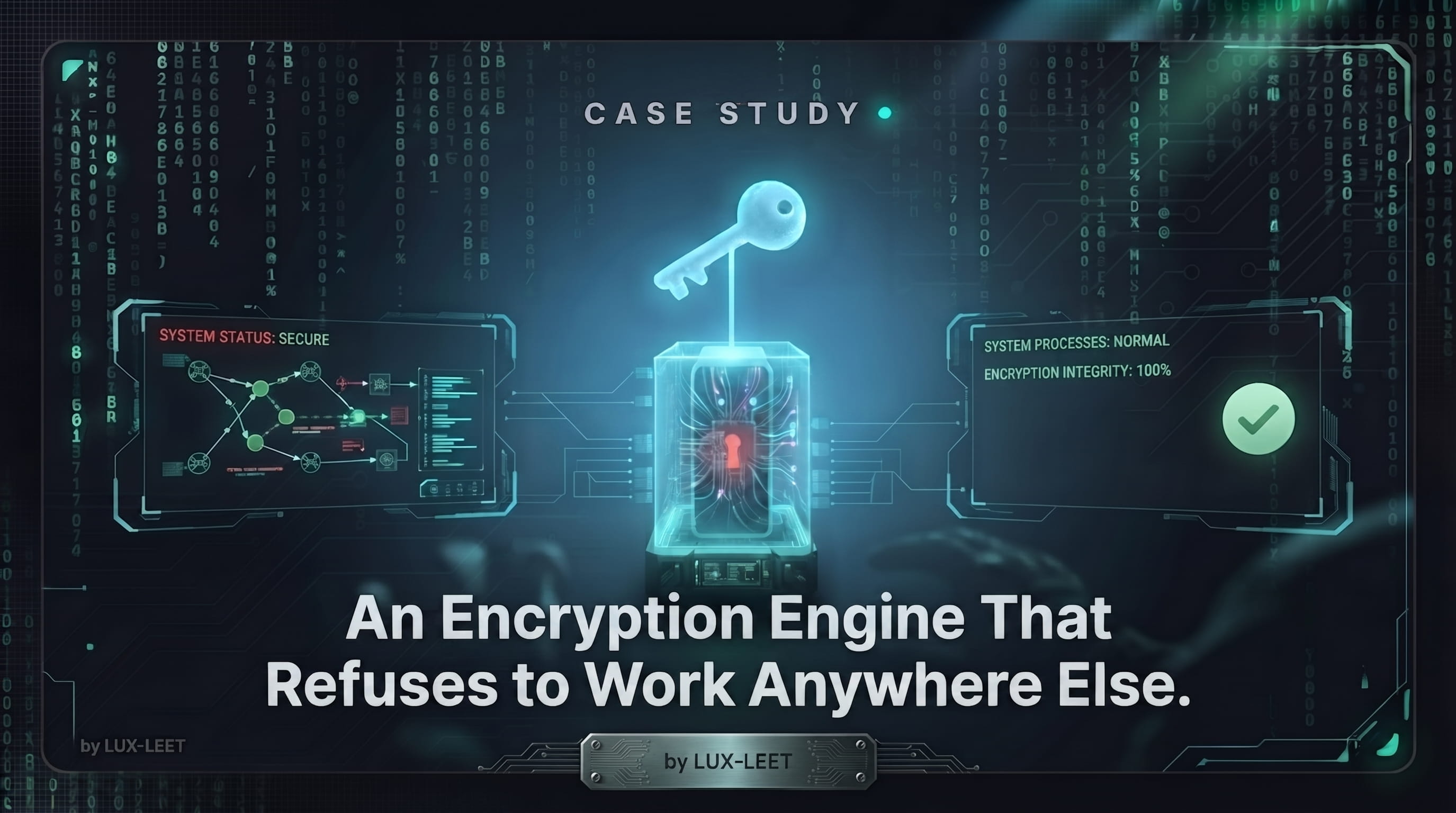
All software infrastructure and user data reside on dedicated physical server cores under 100% in-house stewardship — no subcontractors, no offshore teams — deployed in the region you choose.
We already started with an offshore team - can you take the project over?
Yes. We start with a codebase audit: what's solid, what's fragile, where the security gaps are. Then we stabilise the blockers, document the weak spots, and continue development in-house on a clear roadmap.
How do you handle the timezone and communication gap?
There isn't one. You talk directly to the engineers writing your code, in your working hours, in Dutch or English. No overnight round-trips for a clarification, no account manager relaying requirements second-hand.
Is the higher hourly rate worth it?
The rate is higher; the number of hours is usually lower. Clear specs up front, fewer rework rounds, and no management layer to bridge a remote team mean the finished project often costs less end to end.
LET'S BUILD
TOGETHER.
Ready to start something new? We're excited to help you take the next step.